
CRISPR Prime Editing Solutions
Precise substitutions, insertions, and deletions
Expand what's possible with genome editing
Aldevron, in partnership with IDT, offers Prime Editing (PE) Ultra mRNA designed to meet the demands of modern genome editing workflows.
Prime editing enables researchers to introduce targeted DNA substitutions, insertions, and deletions without requiring double-strand DNA breaks or donor DNA templates.
Designed to support the next generation of genome engineering, prime editing solutions combine Aldevron's optimized prime editor mRNA and Integrated DNA Technologies' (IDT) chemically modified pegRNAs, design tools, and technical expertise to accelerate precision editing experiments.
Performance Highlights
- Create precise substitutions, insertions, and deletions from a single editing platform
- Edit without double-strand DNA breaks or donor templates
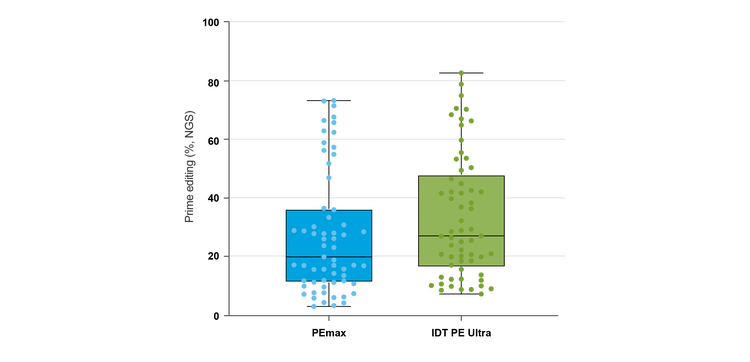
- PE Ultra mRNA delivers better editing activity compared to commercially available prime editor options, like PEmax
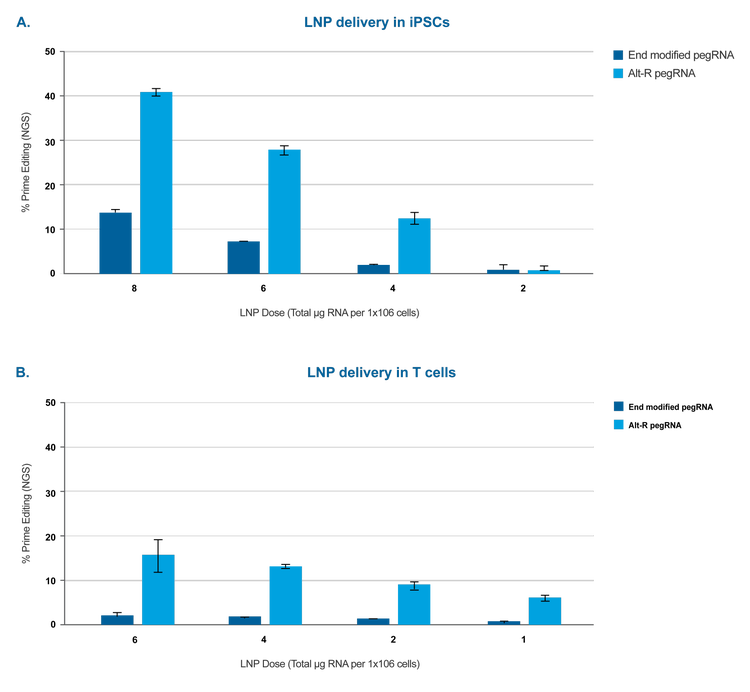
- The proprietary chemical modification pattern used in IDT’s Alt-R™ pegRNA is engineered to enhance stability and editing performance across targets and cell types
Looking for single-base editing? Explore our Base Editing solutions
Available Formats (Research Grade Only)
Enzymatically capped mRNA encoding PE Ultra Prime Editor (PE) in a eukaryotic expression context. Encodes an engineered S. pyogenes-derived nCas9 fused to an engineered reverse transcriptase. Contains 5' and 3' UTRs, Cap 1 structure, >100 nt poly(A) tail, nuclear localization sequences (NLS), and is fully N1-methylpseudouridine modified. Research grade mRNA manufactured by Aldevron and provided at 1 mg/mL in 1 mM sodium citrate buffer, pH 6.4.
Design and order optimized Alt-R pegRNAs using IDT’s online design tool.
Looking for cGMP versions of PE Ultra mRNA? Contact us directly by filling out the form and a member of our team will reach out to you.
Product Details
Prime editing
Prime editing is a CRISPR-based genome editing modality that enables targeted DNA modifications without creating double-strand breaks or relying on donor DNA templates. Compared to traditional CRISPR-Cas9 editing, prime editing offers broader editing flexibility while reducing reliance on cellular DNA repair pathways
Prime editing utilizes:
- A prime editor enzyme
- A prime editing guide RNA (pegRNA) that includes a primer binding site (PBS), and reverse transcription template (RTT)
- Programmable editing instructions encoded directly within the RTT of the pegRNA
This approach enables:
- All base substitutions
- Small insertions
- Small deletions
- Combination edits
Unlike base editing, which is used to create specific nucleotide conversions, prime editing supports a broader range of genomic modifications. Click here for base editing solutions.
Why researchers choose prime editing
Precision editing for translational research
As genome editing programs move closer to clinical application, researchers need editing technologies that can deliver precise genomic changes while minimizing unintended edits. Prime editing enables targeted substitutions, insertions, and deletions without requiring double-strand DNA breaks or donor DNA templates, offering a powerful approach for applications where precision and control are critical.
Streamline the path from discovery to translation
The combined IDT and Aldevron platform provides access to optimized prime editing reagents, highly modified guide RNAs, design support, and manufacturing expertise to help researchers move from early discovery through advanced translational research. By providing continuity across genome editing workflows, Aldevron helps simplify development while supporting future clinical ambitions.
Confidence through engineered performance
Aldevron prime editing solutions include an optimized prime editor mRNA and IDT's chemically modified pegRNAs designed to improve editing success and stability. Together with a free online design tool, these solutions help researchers spend less time troubleshooting complex workflows and more time generating actionable data.
Not sure which editing approach is right for your application?
Compare base and prime editing to find the best fit
Product Data
Comparison of editing efficiency of Aldevron’s PE Ultra mRNA to commercially available PEmax
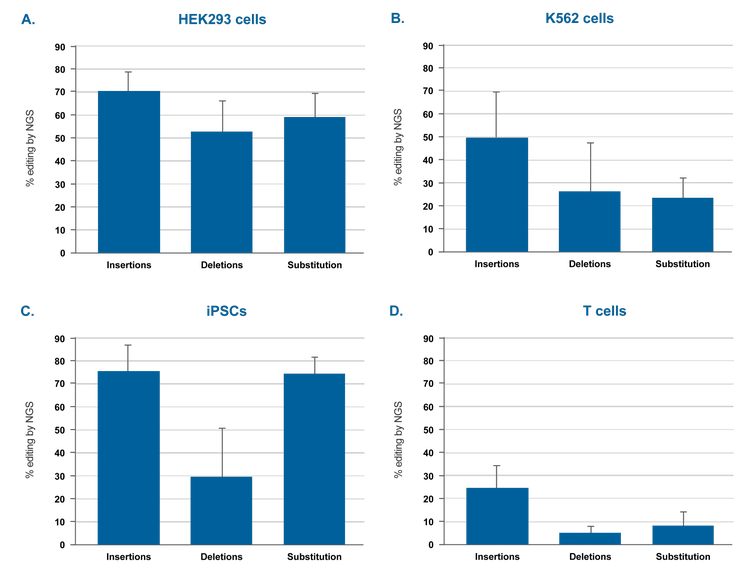
PE Ultra mRNA and Alt-R pegRNA efficiently generate different mutation types across various immortal and primary cell lines
Alt-R pegRNAs are modified and optimized for superior editing in primary cells via LNP delivery
Frequently Asked Questions
Need Help?
Have questions for our CRISPR experts or need a custom solution? Your time is valuable and we’ll prioritize your inquiry. Fill out the form to provide brief information about your project, and we’ll be in touch to discuss it as soon as possible.