
Aldevron Breakthrough Blog
European Biotech Manufacturing
April 22, 2026 by Maarten Walmagh
Stability Matters More Than Ever
Europe’s pharmaceutical landscape is experiencing significant upheaval. Market consolidations, facility closures, and financial instability among contract development and manufacturing organizations (CDMOs) have created uncertainty. Companies that once served as reliable manufacturing partners are now struggling to maintain their commitments, leaving biotech developers facing pressure to secure alternative supply chains.
This instability poses substantial risks for organizations advancing genomic medicine programs through clinical trials and toward commercialization. When a manufacturing partner falters, the consequences extend far beyond logistical inconvenience. Programs can face delays of months or years, clinical holds, and the complex challenge of technology transfer to new facilities, all while racing against regulatory timelines and competitive pressures.
As we move into 2026, the importance of manufacturing stability and business continuity has never been more critical.
Hidden Costs of Manufacturing Disruption
Manufacturing disruptions during critical development phases carry profound financial and operational consequences. A 2022 analysis of cell and gene therapies (CGTs) entering Phase III trials revealed that 43 percent experienced some form of disruption, with Chemistry, Manufacturing, and Controls (CMC) issues accounting for 60 percent of delays during regulatory review. Two-thirds of all disruptions resulted in delays of at least one year.
For companies developing mRNA therapeutics, CRISPR-based gene editing platforms, or viral vector therapies, these delays translate to:
- Extended time to market: Each month of delay represents lost revenue potential and increased competition risk
- Increased development costs: Comparability studies, technology transfers, and regulatory re-submissions add millions to program budgets
- Regulatory complications: Changes in manufacturing processes during late-stage development require extensive documentation and can trigger additional scrutiny from regulatory agencies
- Investor confidence: Manufacturing instability signals program risk, potentially affecting funding opportunities and valuations
What Business Continuity Means for Genomic Medicine
For advanced therapy developers, business continuity encompasses more than simply having a backup supplier. It requires a manufacturing partner with:
- Financial stability: The resources to maintain operations through market fluctuations and continue supporting long-term programs
- Infrastructure resilience: Multiple manufacturing sites with redundant capabilities to mitigate facility-specific risks
- Supply chain security: Established relationships and inventory systems that ensure consistent availability of critical materials, from cGMP plasmid DNA to specialized reagents
- Regulatory track record: Proven compliance across multiple jurisdictions, with the expertise to navigate evolving regulatory landscapes
- Scalability: The capacity to support programs from discovery through commercialization without requiring facility changes or process transfers
These factors become particularly critical for programs requiring specialized manufacturing capabilities. For example, companies developing mRNA-LNP drug products need partners capable of managing the entire sequence-to-vial process, from DNA template design through fill/finish, under a single quality system.
Similarly, gene editing programs relying on ribonucleoproteins (RNPs) or viral vectors require manufacturers with specialized expertise and established cGMP processes.
Building Programs on Stable Foundations
The therapeutic development journey requires years of sustained effort. From identifying a genetic target through regulatory approval and commercial launch, programs depend on consistent access to high-quality materials and reliable manufacturing services.
Selecting a stable manufacturing partner reduces program risk at every stage. Companies can proceed with confidence knowing their plasmid DNA, mRNA drug substance, nucleases, or viral vector components will be available when needed, at research grade for discovery work, GMP-Source™ grade for preclinical studies, or full cGMP for clinical trials and commercial production.
This stability proves particularly valuable during scale-up phases, when manufacturing requirements can increase dramatically. Rather than forcing technology transfers between facilities or partners as volumes grow, working with a partner offering seamless scalability under consistent quality systems accelerates timelines and reduces the technical risk associated with process changes.
Securing Your Supply Chain
The consolidation and instability affecting European biotech manufacturing underscores a fundamental truth: the choice of manufacturing partner represents a strategic decision with lasting implications for program success.
Organizations developing genomic medicines face enough scientific and regulatory challenges without adding supply chain uncertainty to the equation. Partnering with a financially stable, operationally proven manufacturer provides the security of supply and business continuity that advanced therapy programs demand.
Gaining An Edge
As part of the Danaher Corporation, Aldevron can provide several advantages for biotech partners:
- Long-term financial security from the Danaher's diversified business model and sustained investments
- Global infrastructure, including Cytiva for LNP encapsulation platforms and SCIEX for advanced analytics
- Continuous improvement culture that drives ongoing enhancements in manufacturing efficiency, quality, and customer service
- Strategic investment in facility expansion, technology development, and capacity increases to support growing demand
These advantages allow Aldevron to make long-term commitments to partners, supporting programs from early discovery through commercial production without the uncertainties that plague financially constrained competitors.
The Takeaway
As the European pharmaceutical landscape continues to evolve through 2026 and beyond, this stability will increasingly differentiate successful programs from those hindered by manufacturing disruptions. The question facing biotech developers is not whether their current or prospective manufacturing partners will remain viable, but whether those relationships are built on foundations strong enough to support long-term success.
- Have questions on this topic? Contact Us
- Meet your local representatives in Europe
- Have an idea for a topic? Let us know!
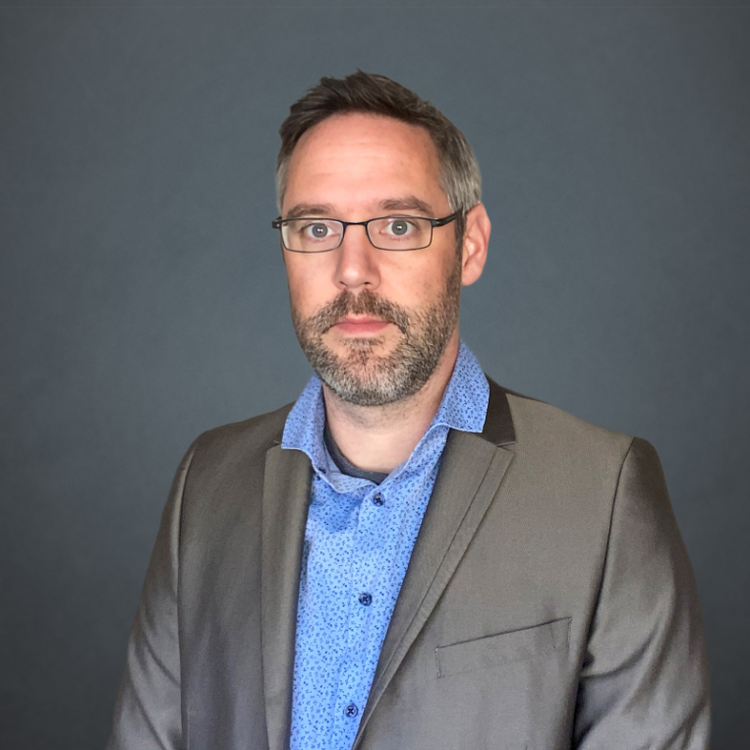
Maarten Walmagh, Business Development Manager for cell and gene therapy, oversees our business partnerships in France, Belgium, and the Netherlands. He holds a master's degree in bioengineering, and cell and gene technology, and a bachelor's degree in engineering, from KU Leuven in Leuven, Belgium. Prior to joining Aldevron, he was a biotech account manager for Cytiva.